

Divorce court matters can feel daunting, and understanding how divorce court works in South Africa is the first step toward protecting your rights and planning next steps.
What happens in divorce court in South Africa?
Divorce court in South Africa is where a judge or magistrate considers the legal ending of a marriage, hears evidence on issues like child custody (or parenting arrangements), maintenance, and the division of assets, and grants orders required by law. The court evaluates whether there has been an irretrievable breakdown of the marriage as set out in the Divorce Act (1979) and then issues final orders that become legally binding.
In practical terms, proceedings vary depending on whether the divorce is contested or uncontested. Uncontested divorces typically follow a paper-based process if both parties agree on consequences (custody, maintenance, property), while contested matters require hearings, evidence, and possibly expert testimony on valuation or parenting assessments. Family law practitioners and specialised litigation attorneys often represent clients to present evidence, negotiate interim orders and manage trial processes.
How do I start the divorce process in South Africa?
To begin a divorce in South Africa you must file a summons or a combined summons and particulars of claim at the appropriate regional or high court, depending on your circumstances (and whether there are complex property or estate questions). The initiating documents notify the other spouse of the case and the grounds for divorce. Parties often follow up with affidavits, parenting plans and financial disclosure.
Before filing, many couples consult a family lawyer to review marriage contracts, antenuptial agreements (with or without accrual), and estate planning implications. If you need help getting started, you can request professional legal advice through a law firm that offers divorce and custody representation or use an online contact portal for guidance. For a local resource, see reliable family law representation at our recommended law office pages:
- Top family law attorney in Durban — family law and divorce representation
- Get legal advice — initial consultations and guidance
How long does a divorce take from filing to finalisation?
The timeframe for divorce varies widely: uncontested divorces can be finalised in a few months, while contested matters with complex property or child custody disputes may take a year or more. Factors that influence duration include court schedules, the need for expert valuation reports, the complexity of financial disputes and whether interim orders (like temporary maintenance) are required.
According to the South African Divorce Act, procedural steps such as service of documents and filing of affidavits follow statutory timelines that the courts enforce. Parties who use mediation or alternative dispute resolution can often reduce the overall timeline by resolving issues out of court. For conveyancing issues tied to property division, you may also need to work with conveyancing attorneys to transfer property titles; see this resource for property legal services: conveyancing attorneys in Durban.
What does the court consider when deciding child custody and contact?
Divorce court decisions about child custody (now referred to as parenting arrangements) centre on the best interests of the child. The court examines stability, each parent’s ability to provide care, the child’s relationship with siblings and extended family, schooling, and any evidence of abuse or neglect. Parenting plans detail day-to-day responsibilities, contact schedules, decision-making authority and dispute resolution mechanisms for future disagreements.
According to the South African Children’s Act and practice in family law, the child’s safety and welfare are paramount. Courts may appoint social workers or psychologists to produce reports. Many family law attorneys specialising in child custody law guide clients through compiling parenting plans, applications for care-and-contact orders and mediation sessions to reach child-focused agreements.
How are maintenance and financial support handled in divorce court?
Maintenance orders are common in divorce court and can cover temporary or long-term support for a spouse and child maintenance. The court assesses both parties’ incomes, earning potential, financial obligations, and the standard of living during the marriage. Maintenance can be varied if circumstances change (job loss, disability, or changed needs).
A practical approach is to prepare full financial disclosure: payslips, bank statements, business records, pension details and expense schedules. Family law practitioners and maintenance law specialists will calculate reasonable maintenance levels and draft an agreement or present evidence at a hearing. For contested maintenance disputes, litigation attorneys experienced in family law can represent you in court to seek or defend claims; see a litigation specialist here: litigation attorney.

How does the court divide marital property and assets?
Property division in South African divorce court depends on the matrimonial property system that applied during the marriage: in / without antenuptial contract (in community of property or out of community of property with/without accrual). If spouses married in community of property, assets are typically divided equally. If out of community with accrual, the accrual system calculates growth in net estates during the marriage and divides accrual accordingly.
Financial disclosure is critical: full asset and liability statements, valuations of property, business interests, retirement funds and shares. According to the Divorce Act and case law, courts aim for a fair division and can make orders altering ownership, ordering sale of assets or awarding spousal maintenance to balance financial inequity. For estate-planning consequences and tailored post-divorce wills, consult estate planning attorneys: estate planning attorney.
What happens if there is domestic violence or safety concerns?
When domestic violence is present, the safety of the victim and any children is the court’s immediate priority. Victims can apply for protection orders (such as interim or final protection orders) through the criminal courts or via civil remedies. Evidence of abuse influences custody, contact and maintenance decisions and can lead to urgent interim relief before a final divorce hearing.
According to the Department of Justice and Constitutional Development, courts have specific processes to protect victims and expedite urgent applications. Family law attorneys familiar with domestic abuse cases can assist in obtaining protection orders, advising on criminal reporting and coordinating safety plans with support services.
Can we avoid court through mediation or alternative dispute resolution?
Yes. Mediation and other forms of alternative dispute resolution (ADR) — such as collaborative law, arbitration, and settlement negotiations — are widely used to resolve divorce-related disputes without full court hearings. ADR focuses on negotiation, privacy and faster outcomes, helping couples keep control of decisions about children, property and finances while reducing emotional and financial costs of litigation.
According to family law practice standards, courts encourage settlement where possible and may require parties to attempt mediation for certain disputes. Mediators, family law attorneys and ADR specialists work with clients to draft binding agreements that the court can convert into consent orders, avoiding contested hearings.
How do antenuptial contracts and estate planning affect divorce court outcomes?
Antenuptial contracts (antenuptial agreements) that regulate property regimes during marriage have a major impact on divorce court property division. Couples who signed antenuptial contracts out of community of property with accrual will have different asset splitting compared to those married in community of property. Wills, trusts and retirement fund nominations are also affected when a marriage ends.
It’s essential to review or update estate plans during or after divorce to reflect new asset ownership and dependants. Conveyancing attorneys and estate planning lawyers often work together with family law specialists to ensure property transfers, title changes and new wills are correctly drafted and registered. For assistance with property transfers after divorce see: professional conveyancing attorneys.
How are legal costs and fees handled in divorce court?
Legal costs vary based on complexity, counsel rates and whether the matter is settled or litigated. Courts can award legal costs to a successful party, but such awards are discretionary and may not cover the full cost of legal representation. Payment arrangements, such as retainers, hourly fees or capped quotes, are commonly negotiated with family law attorneys and litigation specialists.
Many firms offer initial consultations and fixed-fee packages for uncontested divorces, while contested matters typically require ongoing billing. If affordability is a concern, inquire about payment plans, legal aid options and the possibility of negotiated cost orders. For further information on handling contracts and financial disputes during divorce, see resources on contract law and legal advisory services: contracts attorney.

How do I choose the right family lawyer or attorney for divorce court?
Choosing the right attorney involves verifying expertise in family law and divorce, experience with local courts, a records of child custody and maintenance work, and a communication style that suits your needs. Look for lawyers who provide clear fee structures, offer mediation and ADR options, and coordinate with conveyancers and estate planning professionals to address the full range of divorce consequences.
Ask prospective lawyers about caseloads, previous outcomes in similar cases, and whether they will personally handle your matter or delegate to junior staff. Referrals, client testimonials, and consultations help you evaluate whether a lawyer will protect your rights and negotiate effectively. For affordable legal support and broader dispute-resolution services consider firms offering long-term legal partnerships and corporate legal services as well as family law: news and updates and debt recovery pages provide context on wider legal offerings.
What practical steps should I take before attending divorce court?
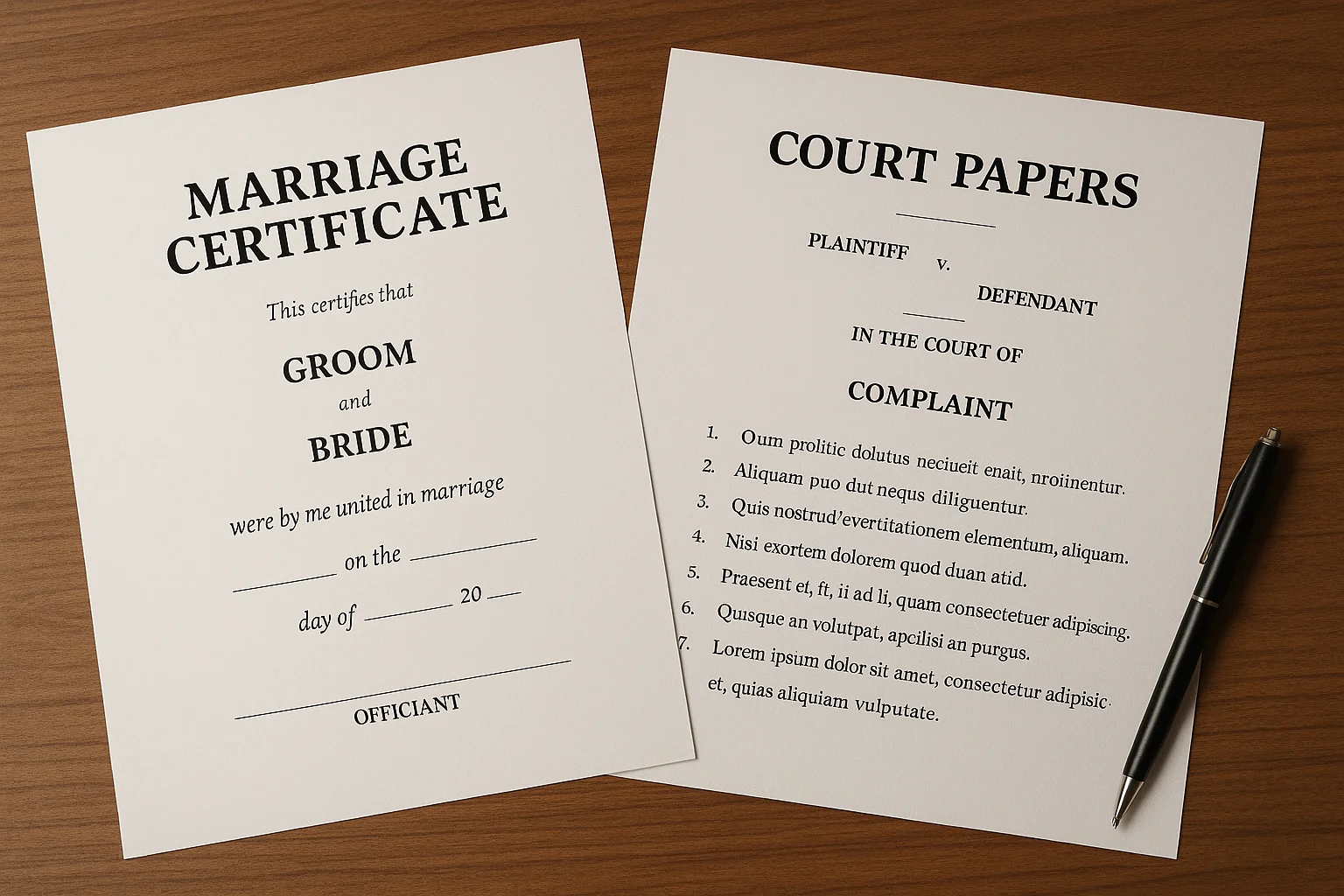
Preparation reduces uncertainty. Gather identity documents, marriage certificates, antenuptial contracts, financial records (bank statements, payslips, tax returns), asset valuations, and any evidence relevant to custody or domestic violence. Draft a clear list of outcomes you seek (custody arrangements, property division, maintenance) and consult a family lawyer to shape your strategy.
Organise copies for the court and opposing counsel, and consider mediation before trial. Update estate planning documents and nominee details for retirement benefits if relevant. Many law firms provide checklists and preparation guides to help clients assemble required documentation quickly and comprehensively — if you need initial help, request legal advice via a professional consultation: get legal advice.
Are there any important legal facts and statistics I should know about divorce court?
Understanding the legal framework helps set expectations. According to the Divorce Act (1979) in South Africa, divorce is granted where the marriage has irretrievably broken down — the Act provides the framework for court orders on custody, maintenance and property division. According to the Department of Justice and Constitutional Development, courts prioritise the safety and best interests of children when making parenting and contact orders. According to Statistics South Africa, civil registration systems maintain annual records of marriages and divorces which inform policy and planning.
For a broader legal context on family law principles, refer to reputable information such as the Family law overview on Wikipedia: Family law. These resources, together with experienced local family lawyers and litigation attorneys, can guide you through divorce court procedures in South Africa while helping you protect your financial future and the welfare of any children.
How can I get dependable support through the divorce court process?
Successful navigation of divorce court depends on clear legal advice, careful preparation, realistic expectations and access to support services. Engage a family law attorney who handles divorce and custody representation, seek mediation where appropriate, and coordinate with conveyancers and estate planners to ensure property and estate consequences are correctly implemented. If you run a business or have employment disputes tied to separation, seek specialised corporate or employment law advice to protect your commercial interests.
Practical next steps: schedule an initial consultation with a family law practitioner, collect critical documents, outline your desired outcomes and explore ADR options to reduce cost and emotional strain. Professional firms in South Africa offering long-term legal partnerships can assist with everything from child maintenance applications and domestic abuse protection orders to drafting wills, employment disputes and commercial contracts — building a coordinated legal strategy that covers both family and business needs.
Summary: key takeaways about divorce court in South Africa
Divorce court resolves separation issues — custody, maintenance and property — under the Divorce Act and related family law statutes. Timelines and outcomes depend on whether matters are contested, the property regime, and whether ADR is used. Prepare by collecting documentation, consulting a family lawyer and considering mediation to resolve disputes efficiently. Courts place children’s best interests first and offer remedies for victims of domestic violence.
For a tailored consultation and to understand how divorce court procedures apply to your circumstances, contact a specialist family law team that can coordinate divorce, conveyancing and estate planning services to secure a comprehensive legal outcome.
