

A deed of transfer is the legal document that records the change of ownership when property is sold or transferred in South Africa. Understanding the deed of transfer is essential whether you’re buying a home in Durban, dividing assets after a divorce, planning an estate, or advising a business on property matters.
What is a deed of transfer?
Question: What exactly does the term “deed of transfer” mean and why does it matter?
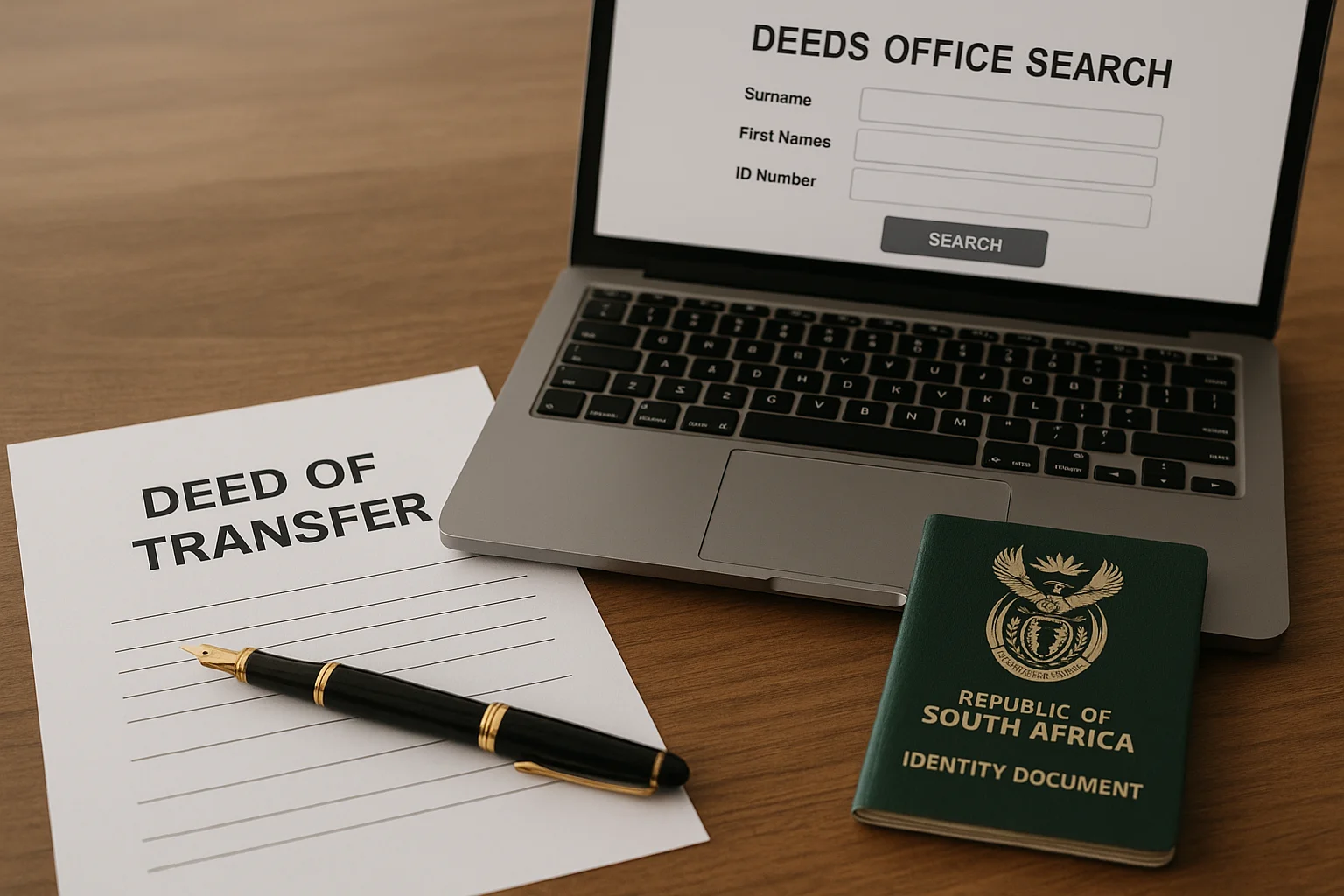
Answer: A deed of transfer is the formal document produced by a conveyancer (a specialised attorney) that effectuates the transfer of immovable property from one party to another. It contains details about both parties, the property description, purchase price or reason for transfer (for example, inheritance or divorce settlement), and any special conditions. Once the deed of transfer is lodged with and registered by the Deeds Office, the registration is prima facie proof of ownership under the Deeds Registries Act. In practical terms, you don’t legally own land in South Africa until the deed of transfer is registered in your name.
Who signs the deed of transfer in South Africa?
Question: Which parties need to sign the deed of transfer and who prepares it?
Answer: The deed of transfer is prepared and attended to by a conveyancing attorney — a specialist within property law who is admitted as an attorney and enrolled to practice in the deeds registry. The parties that usually sign are the seller (transferor) and buyer (transferee). If the property is held in a trust, company or deceased estate, authorised signatories, trustees or executors sign on behalf of those entities. Lenders or bond holders often need to provide consent and sign off too where a mortgage bond is involved. According to the Law Society of South Africa, conveyancers act as officers of the court when handling registrations, ensuring documents meet all legal formalities.
How long does a deed of transfer take in Durban and across South Africa?
Question: What are the typical timeframes for registration and what causes delays?
Answer: There’s no single answer because timing depends on documentation completeness, Deeds Office workload, and whether transfer duty, mortgage bonds, or sectional title matters are involved. In Durban and other South African cities, straightforward transfers commonly take between 6 and 12 weeks once all documents are in order. More complex matters, such as transfers linked to deceased estates, divorce property divisions, or removals of bonds, can take several months. According to the Deeds Office’s service reports, high-volume periods may extend processing times, so conveyancers advise clients to expect variability rather than a fixed deadline. If a transfer is urgent, experienced conveyancers use expedited checks, pre-lodgement assessments and close liaison with banks and SARS to reduce friction.
What costs are involved in a deed of transfer?
Question: What fees and taxes should buyers and sellers expect?
Answer: Transfer-related costs typically include conveyancing fees (attorney and transfer duty compliance), Deeds Office registration fees, conveyancer’s disbursements (searches, stampings, municipal clearances), and where applicable transfer duty or VAT. If a bond is registered or cancelled, bond registration and cancellation costs apply. Buyers should also budget for mortgage bond registration fees and possible rates and utility clearance certificates. According to SARS guidance, transfer duty is payable by the purchaser on certain property purchases unless VAT applies, and the calculation is based on the purchase price or value. A clear cost breakdown helps family lawyers and financial planners advise clients during divorce negotiations, estate planning, or business asset transfers.
How does a deed of transfer relate to divorce and property division?
Question: When couples divorce, how is a deed of transfer used to move property between spouses?
Answer: Property division in South Africa follows the matrimonial regime (in community of property, out of community with accrual, etc.). A deed of transfer formalises any change of title resulting from settlement — for example, when one spouse buys out the other’s interest, or a property is sold and the proceeds divided. Family law attorneys and family lawyers in South Africa work closely with conveyancers to ensure the transfer reflects the divorce order or settlement agreement and avoids future claims. For instance, conveyancers will require a court order or consent paper that authorises the transfer and sets out conditions regarding capital gains tax, maintenance considerations or pension fund withdrawals. This is particularly important where minor children are involved or where properties form part of an estate plan or maintenance settlement.
What documents are required for a deed of transfer?
Question: Which documents must you provide to the conveyancing attorney to lodge a deed of transfer?
Answer: Typical documents include identity documents of parties, the original title deed, municipal accounts and rates clearance certificates, sale agreement, proof of payment of purchase price, power of attorney (if someone signs on behalf of a party), company or trust documents where applicable, and the latest compliance certificates (electrical, plumbing or occupancy where required). A conveyancer will also request tax clearance, transfer duty receipts or VAT certificates depending on the transaction. In cases involving divorce, court orders or settlement agreements are mandatory. For deceased estates, a letter of executorship will be necessary. To avoid delay, gather these items early and liaise with professionals experienced in matrimonial law, estate planning or commercial property matters.

Can a deed of transfer be registered remotely or electronically?
Question: Are there electronic alternatives to physically delivering deeds and attending the Deeds Office?
Answer: The Deeds Registries have modernised many procedures and accept electronic lodgements in specific circumstances. Conveyancers increasingly submit digital searches, e-transfers of mortgage bonds and electronic documentation where the Deeds Office supports it. However, not all aspects are completely online: certain original documents, wet signatures, or certified copies may still be required depending on the nature of the transfer and the registry’s current processes. Many conveyancers offer remote client services — virtual meetings, secure document uploads and verified digital signing — which is a useful option for busy families, clients living abroad, or during complex divorce settlements where parties prefer mediation over court proceedings. For complex corporate or cross-border transfers, specialised conveyancers and commercial lawyers coordinate additional compliance steps.
What common problems delay a deed of transfer?
Question: Why do some transfers stall and how can you prevent common pitfalls?
Answer: Common delays include missing documents, unresolved municipal or rates arrears, inaccurate property descriptions, discrepancies in seller identity or authority to sell (trusts, companies or deceased estates), pending mortgage bond cancellations, unresolved transfer duty or tax issues, and waiting for court orders in contested family law matters. Legal disputes, such as competing claims to ownership in divorce or inheritance disputes, also cause significant delays. Prevention relies on early, comprehensive checks by an experienced conveyancer, clear communication between buyer, seller, banks and legal advisors, and using mediation or alternative dispute resolution where disputes arise. According to the Deeds Registries curriculum, meticulous pre-lodgement checks reduce rejection rates and speed up final registration.
How do conveyancing attorneys help with a deed of transfer?
Question: What role do conveyancers play and when should you instruct one?
Answer: Conveyancers manage the entire legal process of transferring property: drafting and vetting the transfer documents, arranging searches, obtaining municipal and utility clearances, calculating and paying transfer duty, liaising with banks for bond registration or cancellation, and lodging documents with the Deeds Office. They also advise on property law issues — for instance, the impact of a transfer on child maintenance calculations in divorce or on estate plans. You should instruct a conveyancer as soon as an offer to purchase is accepted so pre-lodgement issues can be resolved early. In Durban and broader South African contexts, specialist conveyancing firms (like those offering property legal services) often work hand-in-hand with family law and commercial teams to coordinate complex transactions across litigation, contracts, and estate planning needs. For professional conveyancing options in Durban, see this conveyancing team at Andrew Scott.
What is the taxation and legal effect of a deed of transfer?
Question: What taxes and long-term legal consequences should parties be aware of?
Answer: Registration of a deed of transfer can trigger transfer duty or VAT obligations, capital gains tax consequences for sellers, and possible rates resets by local municipalities. Transfer duty is payable to SARS in many transactions unless the sale is subject to VAT; the conveyancer calculates and ensures payment before registration. Legal effects include the transfer of ownership and the rights and obligations attached to the property — for example servitudes, liens, or special conditions in sectional title schemes. It’s important that family lawyers, estate planners and tax advisors coordinate to address obligations arising from property transfers during divorce settlements or estate distributions. According to the South African Revenue Service (SARS), accurate submission of transfer duty assessments is essential to avoid penalties and registration blocks.

When should you get legal advice about a deed of transfer?
Question: At which stages of a property transaction or family matter should you consult a lawyer?
Answer: Seek legal advice early — before signing an offer to purchase, during divorce negotiations when property forms part of the asset pool, when planning an estate that includes immovable property, or when your business acquires or disposes of property. Early advice ensures that the deed of transfer is drafted to reflect tax planning, maintenance or custody implications, and that any trust, company or estate formalities are observed. Family law attorneys can coordinate with conveyancers and mediators to protect clients’ rights in property division, while litigation attorneys step in when disputes threaten to delay transfer. For straightforward conveyancing needs or for comprehensive estate and family law services in Durban, explore specialised practices that combine conveyancing with family law and estate planning experience.
How do you choose the right conveyancer or legal team for a deed of transfer?
Question: What should you look for when selecting a conveyancer or law firm in South Africa?
Answer: Choose a conveyancer with local Deeds Office experience, clear fee structures, strong communication, and demonstrable links with family law and estate planning teams if your matter overlaps those areas. Credentials to check include admission as an attorney, membership of relevant professional bodies and positive client references. A firm that provides integrated services — such as matrimonial law, estate planning and property legal services — can reduce friction when transfers interact with divorces or wills. For local advice in Durban and an overview of service areas including conveyancing, family law and estate planning, see the practice pages for expert legal services and professional conveyancing attorneys. Early consultation and a written engagement agreement will set expectations and timelines for the deed of transfer process.
Practical checklist: Getting ready for your deed of transfer
Question: What immediate steps should buyers and sellers take to prepare?
Answer: Start with a practical checklist: assemble IDs and company/trust documents; obtain the original title deed or grant a power of attorney to the conveyancer to collect it; ensure rates and taxes are paid up-to-date; confirm municipal and utility compliance; have a clear settlement of mortgage bonds; obtain divorce settlement or executorship letters if applicable; and confirm VAT or transfer duty status with your conveyancer. An early meeting with your conveyancer and, where relevant, your family law or estate planning attorney will lay out the timeline and likely costs. Keeping records organised and responding promptly to requests from your conveyancer dramatically reduces delays and surprises during the registration phase.
Final notes: Where to get help and resources
Question: Who can you turn to for reliable assistance with a deed of transfer in South Africa?
Answer: Use accredited conveyancing attorneys, consult family and matrimonial lawyers when property is part of a divorce, and involve estate planning professionals for intergenerational transfers. For litigation matters that impact the transfer, instruct litigation attorneys early. If you need local, trusted services in Durban for family law, conveyancing and estate planning see Andrew Scott’s team for comprehensive legal support. For general legal advice and to arrange an initial consultation, consider starting with an online contact form or direct appointment. For more background on the legal nature of deeds, see this overview on Wikipedia: https://en.wikipedia.org/wiki/Deed_(law).
According to the Deeds Registries Act, registered deeds are the principal evidence of ownership and persistent record keepers of land rights. According to the Law Society of South Africa, conveyancers must comply with strict professional and procedural rules when preparing deeds. According to SARS, transfer duty must be correctly assessed and paid before registration to avoid penalties and delays.
If you’re handling a transfer linked to divorce, a deceased estate, business sale or complex tax planning, professional advice and early coordination between family lawyers, conveyancers and tax advisors will protect your rights and accelerate the deed of transfer process. For professional conveyancing options and integrated legal services in Durban, see the conveyancing and family law practice pages noted above.
