
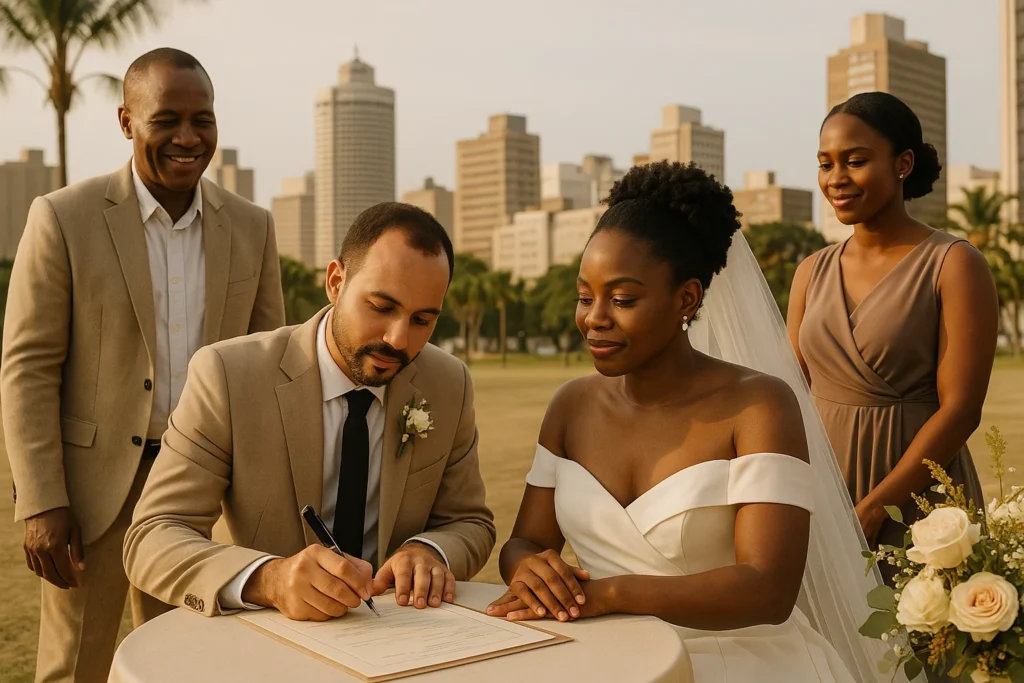
Civil marriage meaning refers to a legally recognised union between two people under South African law, distinct from customary marriages and civil unions. This guide explains the legal framework, rights and obligations that flow from a civil marriage, and how family law, property division, and dispute resolution operate in South Africa.
What is the civil marriage meaning in South Africa?
The phrase civil marriage meaning in South Africa denotes a marriage solemnised under the Marriage Act 1961 by a designated marriage officer, recognised by the state and registered with the Department of Home Affairs. A civil marriage creates a legal partnership with consequences for property, inheritance, child custody, maintenance and taxation. According to the Marriage Act 1961, civil marriages must follow statutory formalities and be registered for the union to have full legal effect.
How does civil marriage differ from customary marriages and civil unions?
Civil marriage meaning is distinct from both customary marriages and civil unions in South Africa. Customary marriages are governed by the Recognition of Customary Marriages Act 1998 and follow indigenous cultural practices, while civil unions (established by the Civil Union Act 2006) allow the legal formation of same-sex or opposite-sex unions with similar legal effects to marriage. According to the Civil Union Act 2006, couples may choose to enter a civil union instead of a civil marriage, but both create comparable legal rights and responsibilities.
Key differences include:
- Officiant and formalities (ordinary marriage officer vs. traditional leader)
- Recognition of customary practices and lobola in customary marriages
- Choice of terminology: marriage vs civil union

Who can solemnise a civil marriage and where can it take place?
A civil marriage must be solemnised by a registered marriage officer — a magistrate, a Department of Home Affairs official, a judge, or certain designated ministers — at a venue agreed by the parties, commonly a Home Affairs office, magistrate’s court, licensed venue, or a private location with prior registration. According to the Department of Home Affairs, every civil marriage must be entered into freely and with the capacity to marry: the parties must be 18 or older (unless a court grants permission) and not closely related.
What legal requirements and documents are needed to register a civil marriage?
To determine civil marriage meaning practically, you need to prepare documentation, meet formal requirements and follow procedural steps. Typical documents and steps include:
- Valid IDs or passports for both parties
- Single status affidavits or divorce/death certificates if previously married
- Completed marriage notice forms and payment of prescribed fees
- Two witnesses present at solemnisation
Table: Common documents and processing notes
| Requirement | Why it matters |
|---|---|
| Identity documents | Proves legal capacity and nationality |
| Affidavit of single status or divorce order | Prevents bigamy and ensures legal availability to marry |
| Marriage officer appointment | Official authority to solemnise and register |
How does civil marriage affect property and matrimonial regimes?
Understanding civil marriage meaning requires clarity about property regimes. In South Africa, couples can marry in one of the following regimes:
- In community of property (automatic unless opted out)
- Out of community of property with accrual (default choice when contractually agreed)
- Out of community of property without accrual (complete separation of estates)
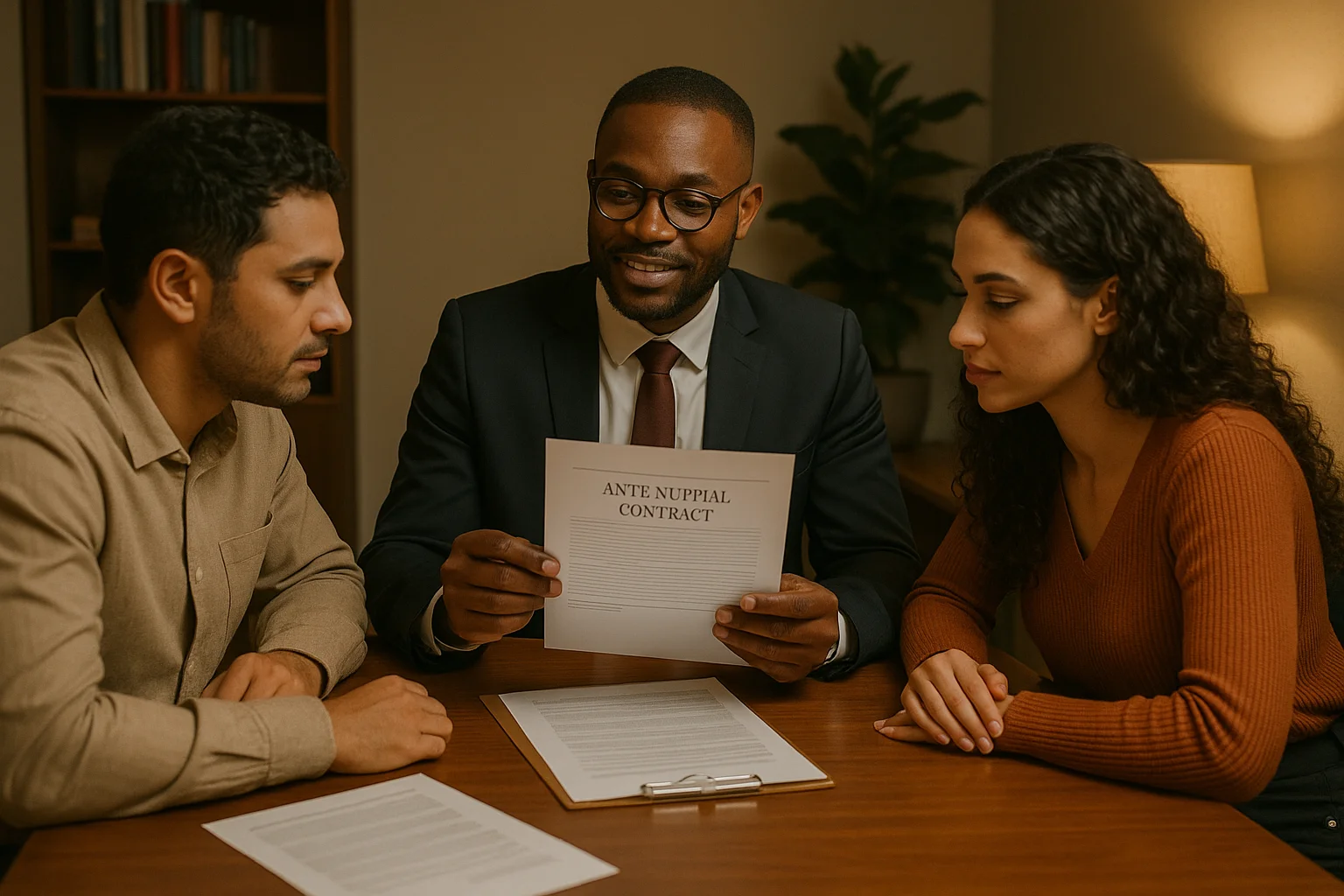
Choosing the right matrimonial regime is crucial for matrimonial law, property division, and estate planning. A marriage in community of property merges assets and liabilities into a joint estate, which has significant implications during divorce and for creditors. If couples want a different regime they must sign an ante-nuptial contract (ANC) before marriage, typically drafted and registered by a conveyancing or contracts attorney.
What rights and responsibilities arise from a civil marriage?
A civil marriage confers mutual rights and duties: support obligations (maintenance), mutual care, spousal consent in certain transactions, inheritance rights and tax implications. Spouses are expected to provide material and non-material support. According to South African family law principles, maintenance may be sought during marriage and after separation. Moreover, civil marriage meaning includes entitlement to social benefits and recognition in employment and corporate legal matters (e.g., spouse’s pension/crash benefits).
How are children, custody and maintenance handled in civil marriages?
When children are involved, civil marriage meaning extends to parental rights and responsibilities. South African law prioritises the child’s best interests in custody, residence and contact disputes. Child maintenance is enforceable by court order or via administrative mechanisms, and maintenance laws apply regardless of matrimonial regime or marital status. According to the Children’s Act and family law practice, custody decisions focus on the child’s safety, stability and welfare, and courts may order joint or sole parental responsibilities depending on circumstances.
Common steps for parents in a civil marriage facing disputes:
- Seek mediation or alternative dispute resolution to avoid litigation
- Apply for parental responsibilities and rights orders in family court
- Use maintenance courts or online portals for enforcement
How is divorce or dissolution handled for civil marriages?
Civil marriage meaning includes the process for dissolution via divorce, which falls under the Divorce Act and ordinary civil procedure. Grounds for divorce include irretrievable breakdown of the marriage; the court will resolve ancillary matters such as child custody, maintenance and property division. Where disputes are complex, mediation and legal mediation services are encouraged to reduce cost and trauma, but litigation remains available for contested matters. According to legal practice, early legal advice from family lawyers in South Africa can narrow issues and protect client rights during separation.
Can foreigners and permanent residents enter into a civil marriage in South Africa?
Yes. Foreign nationals and permanent residents can enter a civil marriage in South Africa provided they satisfy identity and capacity requirements and can produce valid travel documents and single status proof. Additional checks may be required by the Department of Home Affairs. For couples where one partner lives abroad, it’s important to consider international recognition and potential conflicts of law; obtaining legal advice on cross-border matrimonial law and contract law is recommended to avoid future complications.
How does a civil marriage affect estate planning, wills and inheritance?
Civil marriage meaning is central to wills and estates planning. Spousal rights influence intestate succession, estate administration and the drafting of wills. If a spouse dies without a will, the Intestate Succession Act specifies shares for surviving spouses and children. Couples should coordinate matrimonial property regimes with estate planning to ensure coherent outcomes for heirs and creditors. Working with an estate planning attorney helps integrate marriage contracts, wills, trusts and tax planning to safeguard long-term family interests.
When should you consult a family lawyer or use dispute resolution services?
Consult a family lawyer as soon as you face complex issues around civil marriage meaning — before signing an ante-nuptial contract, when disputes about property or child custody arise, or when preparing divorce, maintenance or protection order applications. A family law practitioner can provide tailored advice on matrimonial law, child custody law, maintenance law, domestic violence cases, and litigation services. Many firms in South Africa offer mediation and alternative dispute resolution to settle disputes cost-effectively and preserve relationships where possible.
What practical steps to take now — checklist for couples and individuals?
To apply the civil marriage meaning in your circumstances, follow this practical checklist and seek specialist help where needed. These steps protect rights and reduce future legal exposure.
- Decide on the matrimonial regime and, if needed, prepare an ante-nuptial contract with a conveyancing attorney: see professional conveyancing services.
- Gather necessary documents: IDs, affidavit(s) of single status, divorce/death certificates.
- Book a marriage officer and venue, and register the marriage with Home Affairs.
- Update wills and estate plans after marriage — consult an estate planning attorney.
- If disputes arise, consider mediation or contact family law attorneys specialising in divorce and custody representation.

Where can you get help in Durban and across South Africa?
If you need local legal support, experienced firms provide comprehensive services spanning family law, divorce and custody representation, property and conveyancing, wills and estates, and litigation. For example, you can find expert family law attorneys and legal advice in Durban and nationally through specialist pages that cover family law, conveyancing and estate planning. Early advice preserves rights and helps you navigate South African courts, maintenance applications and domestic abuse protection orders.
Helpful internal resources:
- Top family law attorney in Durban — expert legal services
- Professional conveyancing attorneys in Durban
- Estate planning attorney services
- Litigation attorney services for contested matters
- Get legal advice — contact a specialist
Further reading and legal references
To deepen your understanding of civil marriage meaning and related legislation, consult the principal statutes: the Marriage Act 1961, the Civil Union Act 2006 and the Recognition of Customary Marriages Act 1998. According to the Recognition of Customary Marriages Act 1998, customary marriages that comply with the Act are recognised and enjoy equal status with civil marriages. For an overview of marriage law in South Africa, see the Wikipedia article on Marriage in South Africa.
Summary: Key takeaways about civil marriage meaning
In summary, civil marriage meaning in South Africa establishes a legally recognised partnership with wide-reaching consequences for property, children, maintenance, inheritance and dispute resolution. Choosing the right matrimonial regime, registering the marriage correctly, and planning ahead with wills and ante-nuptial contracts are essential steps. According to established Acts — the Marriage Act 1961, the Civil Union Act 2006, and the Recognition of Customary Marriages Act 1998 — the law provides multiple pathways to form, regulate and dissolve marital relationships while protecting spouses and children. If you need assistance, seek qualified legal help early to protect your rights and interests.
